
Records Around Melrose Park Neighbors
Block research begins with geography. A county map defines which parcels touch the target, the property roll may identify taxpayers, and deeds or plats explain shared land. Village files describe work tied to an address. Historical directories, census pages, maps, and papers can show an earlier block. Each source has a limit, and none creates a reliable live roster of Melrose Park neighbors.
| Source | What It Shows About a Block | Access |
|---|---|---|
| CookViewer | Edges, PINs, intersections, nearby parcels, old layers and district context | Free address or PIN map; no person roster |
| Assessor and tax records | Owner or taxpayer fields, mailing address, class and assessment data | Repeat by parcel; distinguish mailing from situs |
| Deeds and plats | Transfers, lot and block references, common ownership and subdivisions | Cook County Clerk index, office, maps room or copies |
| Village permits and code files | Construction, inspection, compliance and code events by address | Department or FOIA request; exemptions may apply |
| Voter information | Regulated registration data or aggregate counts | Not a free public street list; Illinois law controls use |
| Directories and census | Past households and historical block sequence | Library, archives and image research |
| Clubs and organizations | Public meeting places and civic connections | Public organization list, not member rosters |
An owner's tax mailing address does not prove where that person lives. A parcel can also be a road, church, school, commercial tract, park facility, condominium common area, or vacant land. Record the field name and year. If the question concerns present occupants, use consent and direct contact rather than inferring a household from ownership data.
CookViewer Defines Melrose Park Blocks
CookViewer accepts a 10-digit, 14-digit, or dashed PIN, a property address, or an intersection. Its Property Details panel, parcel layers, historic views, nearby search, comparison control, and print tools make it the strongest geographic starting point. The nearby control needs a source parcel and radius. Use it to define a study area, not to claim that every result is a home.
The CookViewer sample PIN view shows how one selected parcel anchors the surrounding map.
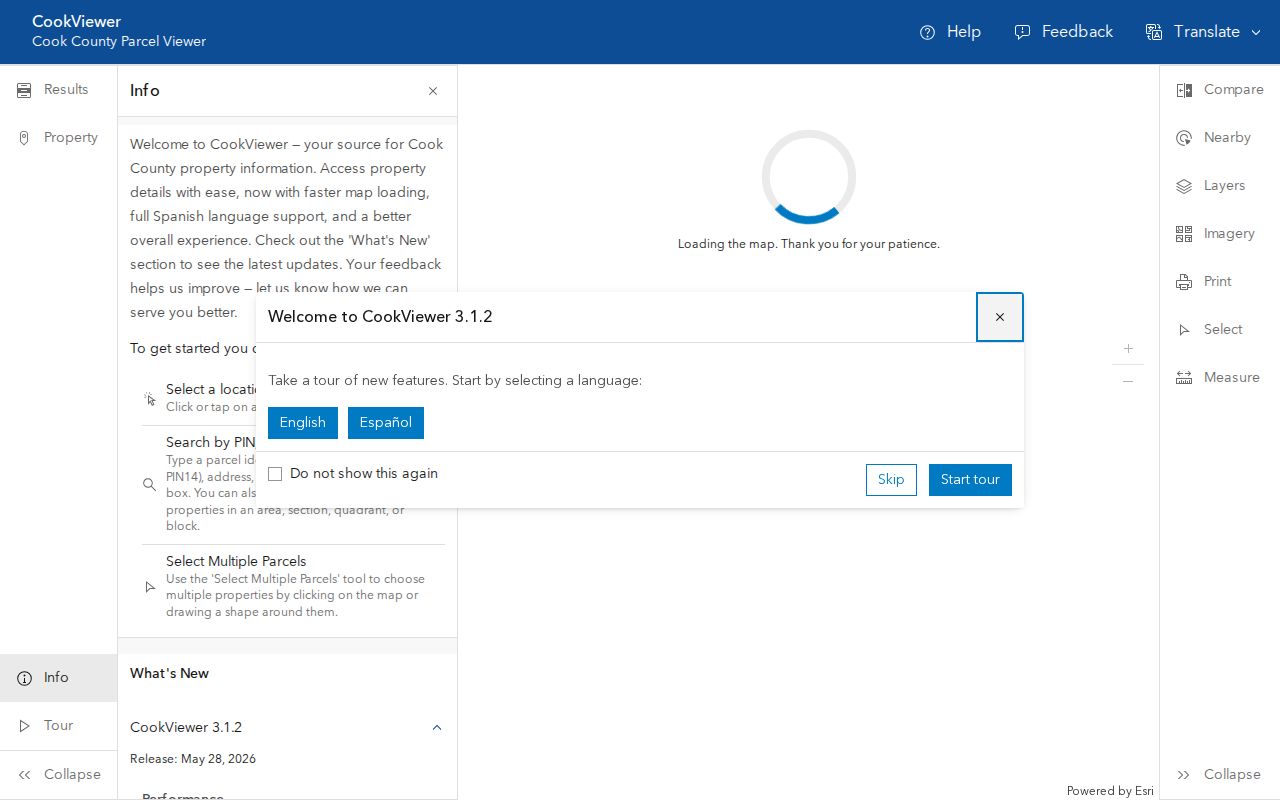
That parcel-first display helps separate lots that merely look close from those that share a boundary. Save a dated print report because layers and ownership fields can change.
Cook County launched CookViewer 3.1 on May 28, 2026, with performance and user-experience changes. Check the current controls rather than relying on an old screenshot. A map label is still geographic evidence, not proof of a person at the site.
Note: Include corner lots, alleys, public ways, and split parcels when defining a block; a simple row of house numbers may omit them.
Map Melrose Park Neighbor Parcels
Move from the target outward one parcel at a time. Keep the map and record result side by side. The process is short, but each step checks a different kind of fact.
- Search the exact address in CookViewer and copy the target PIN, parcel edges, intersection, and current layer date.
- Click each touching parcel, then include corner parcels and any nearby radius that fits the actual question.
- Open the Cook County Assessor address search for each PIN or situs and record the owner or taxpayer field exactly as labeled.
- Compare the tax mailing address, property class, exemptions, and legal description. These details can support ownership but do not guarantee occupancy.
- Use the Clerk's deeds or plats only when a split, common owner, transfer, or subdivision must be explained.
The path is address → parcel → adjacent PINs → assessor record → deed or plat when needed. For a full named-road project, switch to the Melrose Park street directory, which owns the street-by-street record chain.
Homestead evidence may be consistent with owner occupancy, but it is not a current resident certificate. Trusts, companies, estates, and remote mailing addresses also need care. Preserve the tax year so a later reader knows when the result applied.
Melrose Park Block Change Records
A block is more than its owner list. Melrose Park electrical permits can record the property location, owner, applicant, contractor, work, cost, and service details. Compliance forms connect an address with inspections, water-bill or lien steps, and a named owner or representative. These blank forms reveal potential fields but do not prove that a permit was issued.
No public historic permit or code-case index was located. Use the Village Building Department for current routing, then request permits, inspection reports, compliance certificates, and code files for defined addresses and dates. The village FOIA flow chart routes Building, Zoning, Code Enforcement, Public Works, Fire, Police, Library, and Clerk records to the relevant offices.
Public records under the Illinois Freedom of Information Act normally receive a response within five business days, subject to extensions. Ask for inspection first when the volume is unknown. This keeps the request narrow and can avoid ordering pages that do not concern the block.
Community Near Melrose Park Neighbors
The village's clubs and organizations list gives a civic layer that parcel records cannot. It names meeting sites and public contacts. It does not publish full member directories, and inclusion does not prove that a person lives near a meeting place.
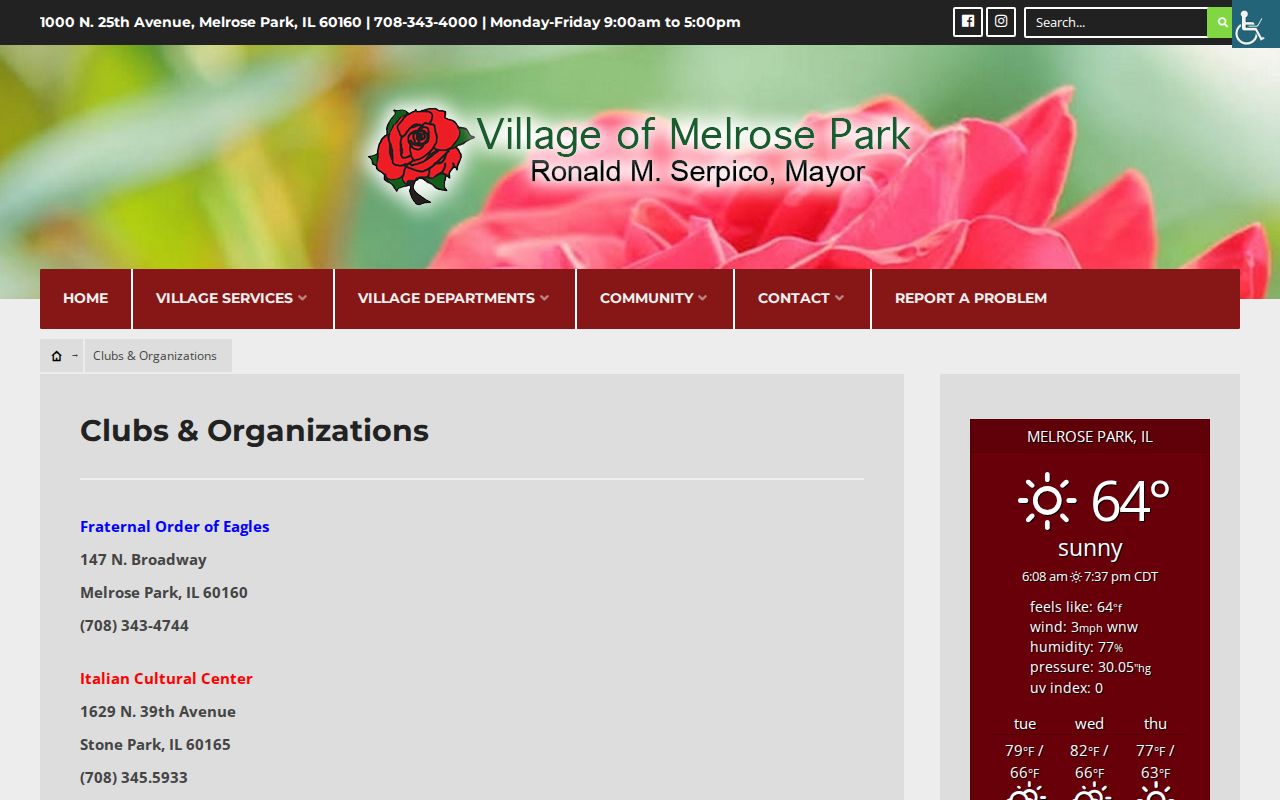
The listing can still lead to public event notices, anniversary histories, photographs, newsletters, or records held by the group itself.
Broadway groups
Fraternal Order of Eagles is listed at 147 N Broadway. Treat the address as a public meeting point, not a household directory.
Our Lady of Mt. Carmel
Knights of Columbus Washington Council 1456 lists meetings on the second and fourth Thursday at the school.
Veteran and senior groups
American Legion Post 368, senior clubs, and the Veterans Park Bulger Park Senior Club appear in village listings.
Chamber
The local chamber says it was founded in 2018 at 900 N 25th, but no complete public membership roster was exposed.
Other listings include Little Flowers of Italy, the Napolitan Club, Melrose Park Little League, and the Italian Cultural Center in neighboring Stone Park. Search a public meeting place in newspapers or photographs for block history, while keeping private participation private.
Historic Melrose Park Neighbors
For an earlier block, search the documented local directories for 1917 and 1920 through 1927. Try Maywood as well as Melrose Park because Newberry files the runs under Maywood. Compare the address sequence with census neighbors, then inspect newspaper pages when OCR returns a name. A census enumeration district can help when an index misses a household.
Sanborn maps from 1895 and 1909 add building footprints, uses, and old street context. A current empty parcel may once have held a house, store, factory, or stable. A deed or plat may show a lot split, while a later permit can date a replacement. None of those sources alone proves occupancy.
The Melrose Park Public Library special collections include digitized newspapers, historic photographs, a Mail-Order Houses project, and reference help. Search nearby towns in the Bellwood area archive as well. Local newspaper coverage crosses municipal lines, so confirm every name against a date, street, church, club, or family relationship.
Official Melrose Park Block Sources
Commercial neighbor tools often combine property data, old address files, public filings, and marketing records. They may be quick, but a polished name list can be stale or attached to the wrong unit. Official sources are narrower. They usually show the field, date, custodian, and legal meaning needed to assess a match.
| Source type | Best use | Main limit |
|---|---|---|
| County parcel and tax records | Define land and identify recorded owner or taxpayer fields | Ownership does not prove current occupancy |
| Village and clerk records | Confirm a dated permit, plat, deed, inspection, or code event | Requires one address and may need a request |
| Commercial compiled category | Possible lead for further checking | Source dates, edits, and match logic may be unclear |
Use a compiled result only as a prompt to check the proper custodian. Do not republish a block roster. A parcel-centered worksheet with source dates is slower but far more defensible.
Note: Public records can identify a property relationship without revealing the private household behind it.
CookCentral Adds Block Context
CookCentral is the county gateway for public maps, spatial data, and GIS services beyond a single parcel card.
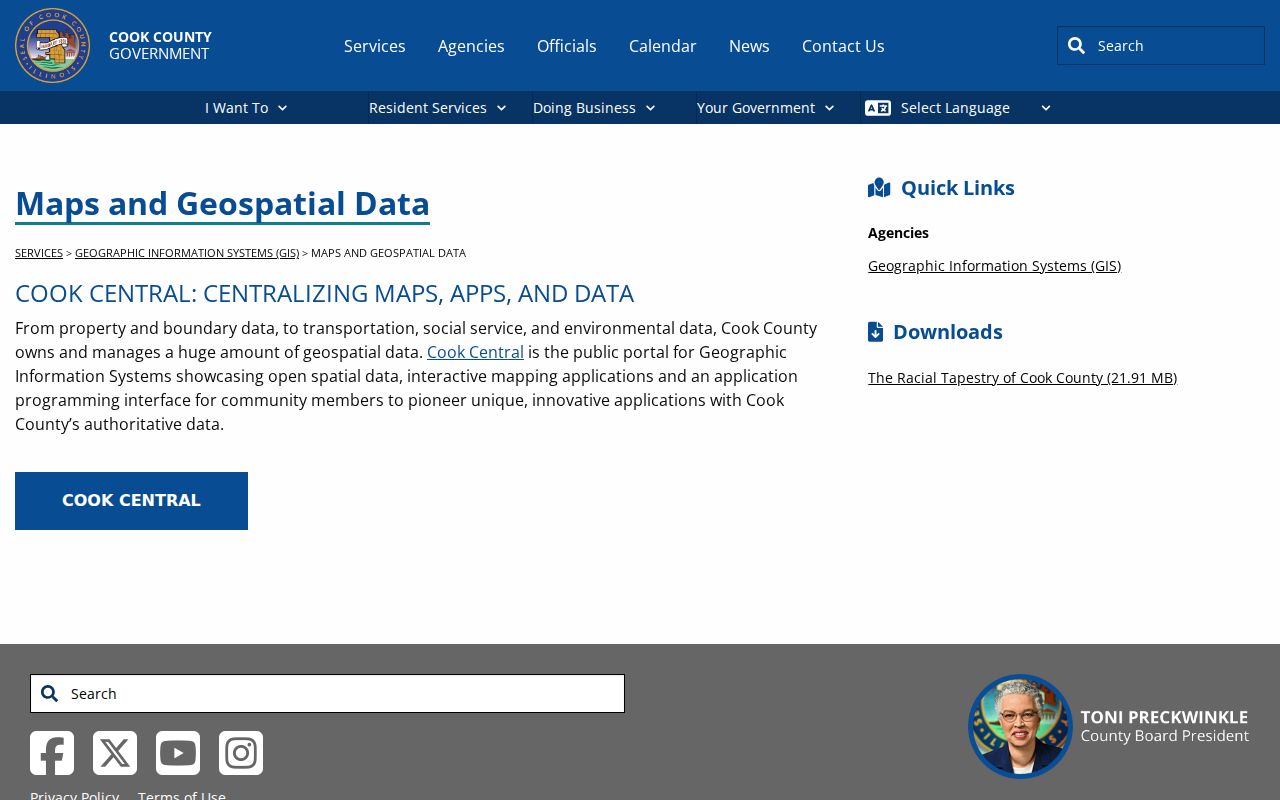
Its map resources can add district or county context to the parcel sequence. A district boundary describes jurisdiction, not a household, so keep this layer separate from owner and occupant evidence.
Melrose Park sits across Proviso and Leyden townships and is not the Cook County seat. That geography matters when a tax, court, or local-history route points outside Village Hall. Preserve the source's own place label, then bridge it through the PIN, exact address, district, or township.
Protect Melrose Park Neighbor Privacy
Parcel records do not reveal every person in a household. Non-owner occupants, private utility or delivery accounts, juvenile information, sealed cases, and exact locations redacted by a custodian must stay outside a neighbor lookup. Illinois voter information is regulated under 10 ILCS 5/1A-16. The ordinary public tools should not be described as a free street-wide voter search.
Illinois also operates an Address Confidentiality Program for qualifying survivors of domestic violence, sexual assault, trafficking, and stalking. It provides a substitute address and voting protections, though it cannot promise secrecy in every property record. Never try to defeat a redaction or infer a protected location from other sources.
Lawful use. Look up Melrose Park neighbors for civic curiosity, reconnection, or personal safety awareness. Never use records to watch, harass, intimidate, or harm anyone.
When a fact matters, verify it with the custodian and note its date. Direct, respectful contact is the only sound way to confirm who currently lives at a private address.